
Eva2o – Food Cooling Through Evaporation
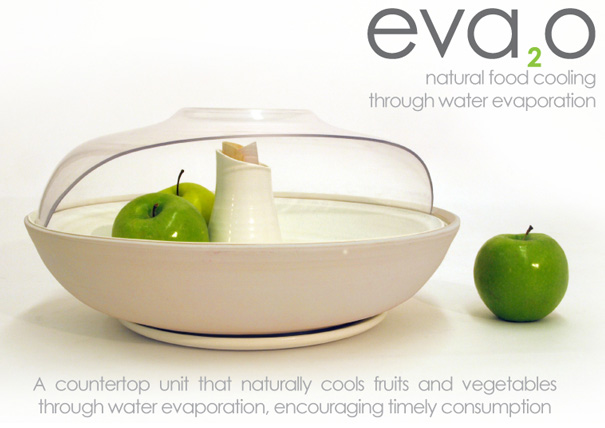
Industrial designer Dennis Cheng has designed a simple system to keep fruit and veg cool without using any electricity, in fact only using the cooling powers of evaporation. This concept is to help draw people away from a reliance on fridges and return to more natural methods of cooling and storing foods. This concept design has been named eva2o.
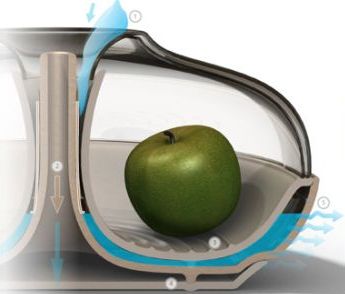
This concept works on the age old knowledge that water evaporation cools, the same system used by all of us when we sweat. Using a double walled design the fruit and veg rests on an inner bowl which is made of glazed earthenware. This bowl rests on a non-glazed earthenware bowl, the feet on the bowl createing a space between the two bowls allowing water to be stored between them. The outer bowl also has feet to rest on, keeping a space between it and the shallow glazed drip dish. This design allows both air and water to circulate where they are needed to aid the evaporation process.
The shape of the eva2o has been designed to allow the water to be easily poured between dishes, the overlapping glass lids act as a funnel in the centre. The porous nature of the unglazed dish allows the water inside to evaporate through the sides of the dish, thus pulling away heat and cooling the inner bowl, and so the fruit and veg resting on it.
The designer Dennis Cheng has a fine eye for detail on this concept. The ring of ridges on the inner dish, which keep the food items elevated, have a gap running the radius of the bowl to aid cleaning it out. The two overlapping lids allow you to slide them apart easily to gain quick access to the contents within. This is also to help reduce the amount of waste there is as easily accessible fruit and veg that can be seen clearly is thought to encourage us to use it, while lasting longer due to the cooling to be used.
In theory this looks like a environmentally friendly way of keeping our fruit and veg cool, while allowing us to see it and access it easily. At the very least its a great idea for a cool fruit bowl.
Source: Yanko Design
About Author

